
Want to buy a house this year, but not sure if the timing’s right? Seasonally, it may actually be a better time to buy than you expect.Yes, mortgage rates have been ticking up lately –

Dated: June 25 2025
Views: 286
Updated on April 30, 2025
Heating and cooling problems can cause discomfort and sky-high utility bills on top of inconvenience. Keep your home’s HVAC in tip-top shape.
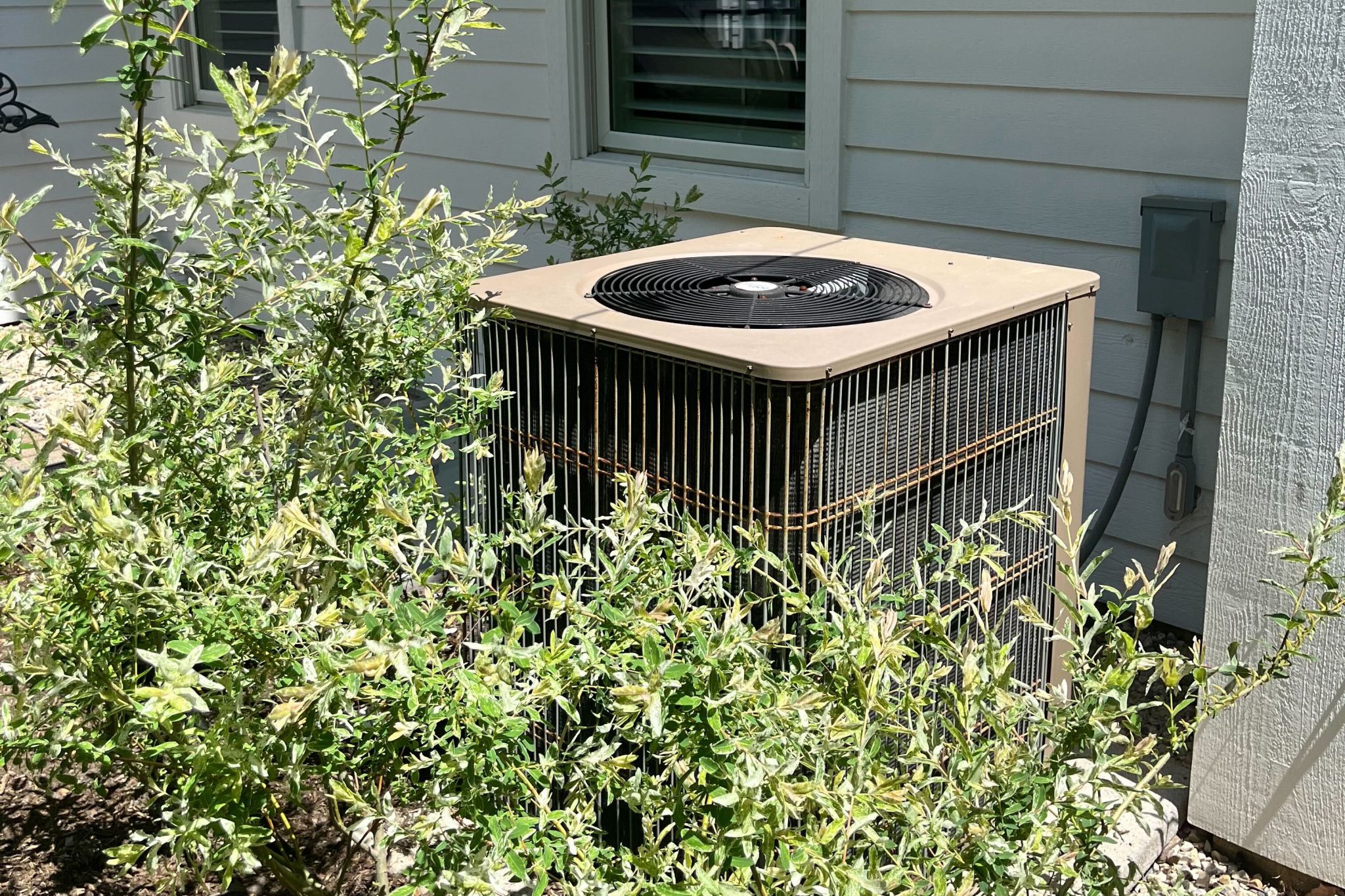
Weather extremes are putting more pressure on homeowners’ heating, ventilation, and air conditioning systems in keeping homes cool during the summer and warm in the winter. That's one reason it's more important than ever to keep up your HVAC maintenance. But that's not always top of mind for homeowners.
The HVAC often runs in the background, which means you likely don’t give it much thought — until it breaks down, that is. And that can happen at the worst times. Forty-two percent of homeowners say they’ve experienced HVAC system issues during heat waves, according to a new survey from Hippo, a home insurance company. “A failing HVAC system during a scorching summer can lead to discomfort, costly utility repairs, and even health risks for more vulnerable populations,” says Courtney Klosterman, a home insights expert at Hippo.
But many costly HVAC disasters can likely be prevented. For example, fewer than half of homeowners, 47%, say they’ve had HVAC servicing within the last year. Yet, experts advise annual HVAC servicing to avoid expensive repairs. Even fewer homeowners, 32%, say they’ve done basic cleaning and HVAC maintenance to help prevent heat-related home damage, according to the Hippo survey.
To be fair, many homeowners may not be sure what to do. Refer to this checklist regularly to make sure you’re doing 10 activities that will keep your HVAC humming.
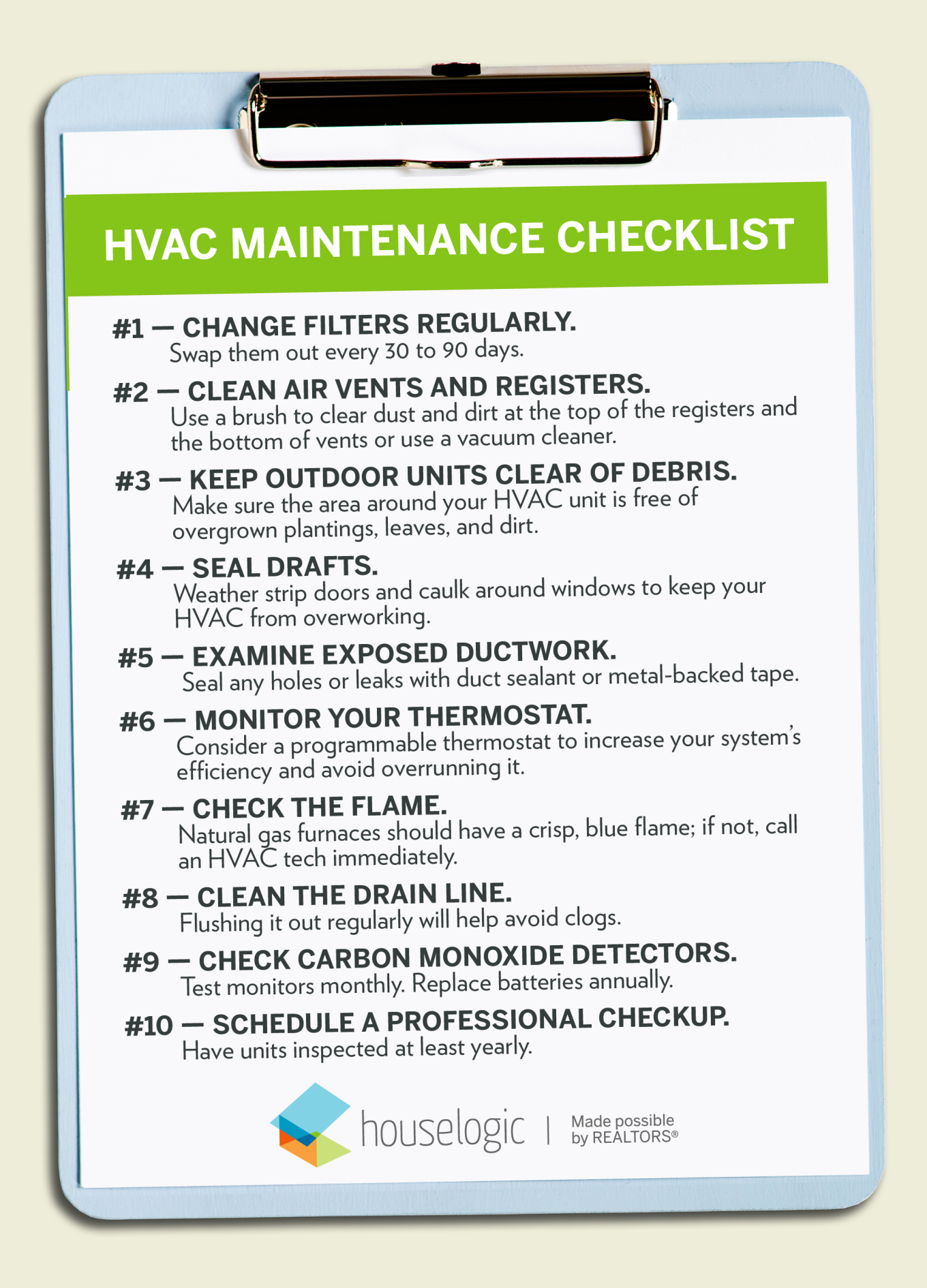
Many of the HVAC maintenance tasks that will keep your system operating efficiently are DIY, and these tips will make the process easier.
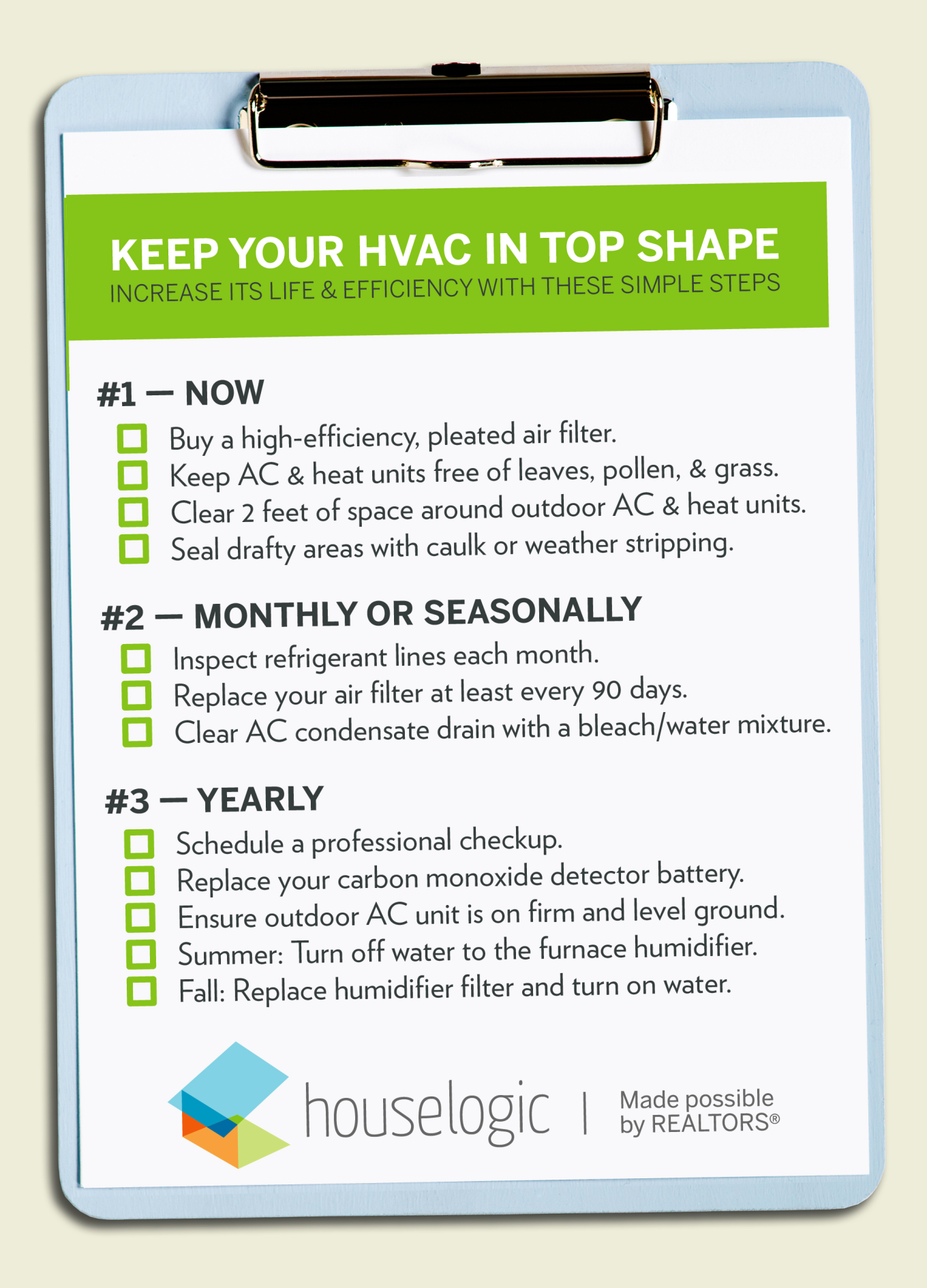
“Air filters keep dust and particles from getting into your ductwork and HVAC,” says Glenn Wisemen, sales manager at Top Hat Home Comfort Services in Ontario, Canada. “If they are covered in dust, the air will filter through your furnace much slower, making your system more inefficient.” Allergens also can build up, affecting your home’s indoor air quality. High-efficiency pleated air filters (also known as MERV 11 or 12 filters) can capture the smallest particles, filtering out bacteria, viruses, dust, pollen mold, pet dander, and more. Angi recommends changing filters according to this schedule:
Likewise, vents, registers, and condenser and evaporator coils need to be kept clean to prevent a buildup of dust and dirt that could increase energy costs and even reduce your HVAC’s lifespan. AC maintenance tips include keeping outdoor units clean and free of any obstructions. Make sure shrubs or trees near your HVAC unit are at least two feet away to allow adequate flow around the condenser, according to Energy.gov.
Install weather stripping on the top of doors to seal out drafts and prevent warm or cool air from escaping, Wisemen suggests. “Caulk around windows, floors, and other potential sources of heat leakage to keep more money in the bank by reducing your heating bills.” This inexpensive upgrade can lower your costs and help your furnace and AC units operate more efficiently, he adds.
Monitor your thermostat to make sure it’s working properly and consider upgrading to a programmable or smart thermostat to increase your unit’s efficiency and avoid overrunning your unit, suggests Anees Jarral, cofounder of Cielo WiGle Inc., a smart-tech HVAC firm, in Seattle. “Whether you have a central HVAC system or mini-splits, pairing your system with a smart thermostat can offer numerous benefits.” For example, it can enable you to set weekly schedules automatically and prevent energy waste, gain remote control and monitoring, and receive energy usage reports.
Ducts help distribute the air throughout the house, but up to 30% of the air that moves through ducts can get lost because of leaks, holes, or poorly connected ducts, according to Energy Star. Signs of faulty ducts: rooms that are difficult to heat or cool, tangled or kinked flexible ducts, stuffy rooms, and high summer or winter utility bills. Most ducts are concealed behind walls or ceilings, so you may only be able to examine exposed ones in the basement, attic, or garage. Seal any leaks or holes with duct sealant (mastic) or metal-backed (foil) tape. Also, make sure connections at vents and registers are well-sealed where they meet the floors, walls, and ceiling. If needed, contact a technician to help seal leaky ducts.
HVACs have an AC condensate drain line that can become clogged with built-up sediment, algae, or mold. Some AC units have sensors that may alert you when they detect clogs. If you don’t have those, telltale signs include full drain pans, water around the indoor unit, an AC that won’t turn on, or a musty odor when running the AC. Clean the drain line every three months with a mixture of bleach and water.
HVAC systems are a common source of the potentially fatal, odorless gas known as carbon monoxide, particularly when units have been poorly maintained. Your HVAC system can even spread carbon monoxide further around your house. Without a detector, you likely won’t know if CO is present. Replace CO monitor batteries and run monthly tests to make sure monitors are working properly.
On natural gas furnaces, check the color of the unit’s flame. It should be a crisp, blue color. If the flame appears yellow, orange, or green or pops of these colors, contact an HVAC tech immediately. It may indicate a combustion problem, which can lead to rising amounts of carbon monoxide.
Experts advise having an HVAC system inspected by a professional at least once a year to prevent costly issues or breakdowns. The average HVAC inspection costs $300. That’s an investment, but an HVAC replacement could cost 25 times that amount. So, the inspection may be money well spent. “If you live in an area susceptible to heat waves, comprehensive inspections and cleanings could potentially help you save on your electric bill and reduce the strain on your cooling systems,” Klosterman says.
Red flags can signal that your HVAC isn’t running properly. Those symptoms include unusual sounds and odors, inconsistent temperatures, frequent cycling, and poor airflow. HVAC experts say the following six are the most common problems they spot:
If you spot problems, contact a technician for HVAC servicing. Find companies that specialize in HVAC servicing for repairs or installation. Check online directories for heating and cooling companies such as the Better Business Bureau, Yelp, or Angi, or ask neighbors or a real estate agent for recommendations. Be sure to read online reviews of any HVAC service companies you’re considering.
A new HVAC system costs an average $7,500 and possibly upward to $12,500, depending on the type and size of unit. An HVAC repair, on the other hand, could cost a fraction of that, averaging $350 nationwide, although that could vary depending on what needs to be done (from as low as $100 up to $3,000), according to Angi.
Don’t just expect your homeowners insurance to pay up if something goes wrong. Most standard homeowners insurance policies do not cover claims when an HVAC unit is damaged because of general wear and tear or poor maintenance, according to Hippo.
Since HVACs are big-ticket investments, they can have an impact in real estate. You’ll need to disclose if the HVAC isn’t working properly, and a home inspector will likely check it for a home buyer when you sell. If you have a new HVAC, that's a strong selling point, so tout it when you sell. It could raise your home’s value by up to 7%, particularly when installing an energy-efficient system, according to Angi.
Skimping on HVAC maintenance can be costly. But following simple steps and tips can save on your utility bills and repair costs while keeping you a lot more comfortable at home.
Interested in more real estate tips? Feel free to contact me directly!
Providing a superior level of informed, professional real estate services to buyers and sellers throughout Central Minnesota. We have agents specializing in residential, commercial, multifamily, new construction, existing, investment properties, foreclosures/REO, and short sales with offices located in:
Multiple Office Locations To Serve YOU!
Saint Cloud 320-259-4554
Princeton 320-983-3555
Sartell 320-259-4554
Little Falls 320-259-4554
Minneapolis 763-565-2000
Hutchinson 320-455-9127
Litchfield 320-298-1140
Premier Real Estate specializes in MANY areas around Central MN including Saint Cloud, Waite Park, Rice, Royalton, Sartell,
Want to buy a house this year, but not sure if the timing’s right? Seasonally, it may actually be a better time to buy than you expect.Yes, mortgage rates have been ticking up lately –
Selling This Fall? You Haven't Missed Your WindowSummer's winding down, and if you've been thinking about selling, you might be wondering if you missed your chance. Better to wait until next year or
Data Centers Are Moving Closer to Homes. What Does That Mean for You?Data centers probably weren't on your list of things to think about when buying or selling a home.School districts? Sure. How
The Housing Market Split in 2. Which Side Is Your House On?Ask a couple people how the housing market is doing and you’ll probably get a couple different answers. That’s because right,
 The data relating to real estate for sale on this web site comes in part from the Broker Reciprocity Program of the Regional Multiple Listing Service of Minnesota, Inc. Real estate listings held by brokerage firms other than Premier Real Estate Services are marked with the Broker Reciprocity logo or the Broker Reciprocity thumbnail logo (little black
house) and detailed information about them includes the name of the listing brokers.
The data relating to real estate for sale on this web site comes in part from the Broker Reciprocity Program of the Regional Multiple Listing Service of Minnesota, Inc. Real estate listings held by brokerage firms other than Premier Real Estate Services are marked with the Broker Reciprocity logo or the Broker Reciprocity thumbnail logo (little black
house) and detailed information about them includes the name of the listing brokers.
The broker providing these data believes them to be correct, but advises interested parties to confirm them before relying on them in a purchase decision.
© 2026 Regional Multiple Listing Service of Minnesota, Inc. All rights
reserved
By searching, you agree to the End User License Agreement.
Digital Millennium Copyright Act (DMCA) Notice
The Digital Millennium Copyright Act of 1998, 17 U.S.C. 512 (the "DMCA"), provides recourse for copyright owners who believe that material appearing on the Internet infringes their rights under U.S. copyright law. If you believe in good faith that any content or material made available in connection with our website or services infringes your copyright, you (or your agent) may send us a notice requesting that the content or material be removed, or access to it blocked. Notices and counter-notices should be sent in writing by mail to Michael Bisping, Director, Customer Relations, Regional Multiple Listing Service of Minnesota, Inc, 2550 University Avenue West, Suite 259S
Saint Paul, MN 55114 or by email to mbisping@northstarmls.com. Questions can be directed by phone to 651-251-3200.
